






Overcooked rice can become soft, mushy, sticky or watery, especially when too much water is used or the rice is cooked for too long. While it may not have the same texture as properly cooked rice, you do not always need to throw it away.
Depending on how overcooked the rice is, you can remove excess moisture, improve its texture or use it in another dish. The right method depends on whether the rice is slightly soft, very mushy or completely waterlogged.
Why Does Rice Become Overcooked?
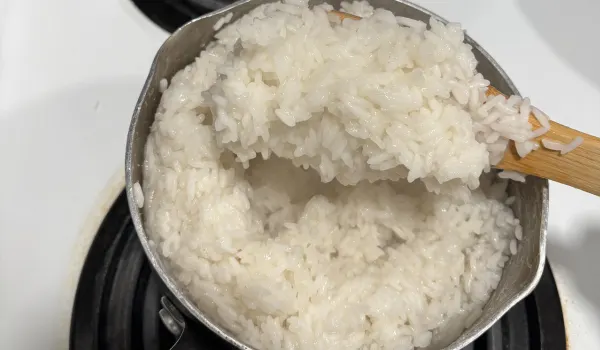
Rice usually becomes overcooked because of excess water, excessive cooking time or improper heat control.
| Reason | What Happens to the Rice |
| Too much water | Rice becomes soft or watery |
| Cooking for too long | Grains lose their structure |
| Very low heat for too long | Rice continues absorbing water |
| High heat with excess water | Rice can become mushy |
| Not checking rice while cooking | Rice may remain on heat after becoming fully cooked |
| Covering it for too long after cooking | Steam can make it softer |
Understanding the cause can also help you avoid the problem next time.
How to Fix Slightly Overcooked Rice
If the rice is soft but the individual grains are still visible, it is relatively easy to improve.
- Drain Excess Water
If there is still water in the cooking pot, immediately drain it.
Do not continue cooking the rice in the remaining water because the grains will absorb even more moisture.
After draining, allow the rice to sit uncovered for a few minutes so excess steam can escape.
- Spread the Rice on a Plate or Tray
Transfer the cooked rice to a large plate, tray or wide bowl.
Spread it into a thin layer instead of keeping it in a deep pile.
This allows steam to escape and helps the rice cool faster.
Avoid aggressively stirring the rice because the soft grains can break easily.
- Let the Rice Cool
Sometimes rice appears more mushy while it is hot because the grains are still full of steam and moisture.
Spread it out and allow it to cool naturally.
Once it cools, the grains may become firmer and easier to handle.
- Refrigerate It for Later Use
If the rice is only slightly overcooked, cooling it properly can improve its texture.
Once the rice has cooled appropriately, store it in a clean, covered container and refrigerate it promptly rather than leaving cooked rice at room temperature for a long period.
Cold rice can also work well for dishes where individual grains are preferable.
How to Fix Very Mushy Rice
If the grains have absorbed too much water and are beginning to break apart, it may not be possible to restore the original texture completely.
However, you can still make the rice useful.
Method 1: Spread and Air-Dry the Surface
Spread the rice thinly on a large plate or tray.
Leave it uncovered for a short period so excess surface moisture can escape.
Do not expect this method to turn completely mushy rice into perfectly separate grains. It is mainly useful when the rice is only moderately overcooked.
Method 2: Use It for Fried Rice Carefully
Very soft rice is generally not ideal for fried rice because the grains can break and become even more sticky.
However, if the rice is only slightly overcooked, chilling it first can make it easier to handle.
Use a wide pan, moderate heat and minimal stirring.
Method 3: Turn It Into Rice Cutlets
Mushy rice can work well as a binding ingredient for rice-based cutlets.
Mix the rice with ingredients such as:
- Boiled potato
- Chopped onion
- Green chilli
- Coriander
- Spices
- Breadcrumbs or another suitable binding ingredient
Shape the mixture into small patties and cook until the outside becomes firm.
Method 4: Make Rice Pancakes or Chillas
Soft cooked rice can be incorporated into a batter for savoury pancakes or chillas.
Depending on the recipe, you can blend the rice with ingredients such as flour, curd, vegetables and spices to create a suitable batter.
This gives overcooked rice a completely different purpose instead of trying to restore its original texture.
How to Fix Watery Rice
If your rice is cooked but there is still a significant amount of water in the pot, act quickly.
Step 1: Drain the Water
Carefully drain the excess water.
If the rice is very delicate, avoid repeatedly stirring it.
Step 2: Let Steam Escape
Transfer the rice to a wide vessel or tray and spread it out.
The larger surface area allows excess steam to escape.
Step 3: Avoid Adding More Water
Do not add additional water, even if the rice appears unevenly cooked.
Adding water at this stage can make the texture even softer.
Step 4: Use the Rice in Another Dish if Necessary
If the rice remains too soft after draining and cooling, consider using it for a recipe where a soft texture is acceptable.
Can You Fix Completely Mushy Rice?
Completely mushy rice usually cannot be returned to its original grain-by-grain texture.
Once the rice grains have absorbed too much water and their structure has broken down, drying the rice cannot completely reverse the cooking process.
Instead, use the rice in dishes where a soft consistency is appropriate.
Good Uses for Very Soft Rice
- Rice porridge
- Khichdi
- Rice kheer
- Rice pancakes
- Rice cutlets
- Rice-based batter
- Soups where a soft texture is suitable
- Other recipes that call for soft or mashed rice
This is often a better solution than repeatedly heating or drying the rice.
How to Make Overcooked Rice Less Sticky
If the rice is soft but not completely mushy, these steps can help:
- Drain excess water immediately.
- Spread the rice on a wide plate.
- Allow excess steam to escape.
- Avoid vigorous stirring.
- Let it cool before handling.
- Refrigerate it if you plan to use it later.
- Use a fork to gently separate the grains once they have firmed up.
Do not press the rice down or repeatedly mix it because this can break the grains and release more starch.
Can You Put Overcooked Rice in the Oven?
For slightly overcooked rice, gentle dry heat can help remove some surface moisture.
Spread the rice in a thin layer in a suitable oven-safe dish and use gentle heat for a short period. Keep an eye on it so the rice does not dry out or develop a crust.
This method is more useful for rice that is soft or slightly wet rather than completely mushy rice.
What Not to Do With Overcooked Rice
Some common attempts can make the problem worse.
Do Not Keep Boiling It
If the rice is already overcooked, continued boiling will usually make it softer.
Do Not Add More Water
Extra water will increase the moisture content and make the rice more mushy.
Do Not Stir Aggressively
Soft rice grains can break easily when stirred repeatedly.
Do Not Fry Very Wet Rice Immediately
Very wet rice can become sticky and clump together when added directly to a hot pan.
Do Not Try to Completely Restore Mushy Rice
If the grains have already broken down, it is usually more practical to repurpose the rice.
How to Prevent Rice From Becoming Overcooked
The easiest way to deal with overcooked rice is to prevent it in the first place.
Measure the Water
Use an appropriate water-to-rice ratio for the particular type of rice and cooking method. Different varieties can require different amounts of water.
Check the Rice Near the End
Do not rely only on a fixed cooking time. Start checking the rice as it approaches the expected cooking stage.
Turn Off the Heat at the Right Time
Once the rice is properly cooked, remove it from direct heat instead of continuing to cook it unnecessarily.
Let It Rest
After cooking, allow the rice to rest briefly according to the cooking method. This helps distribute moisture without continuing to boil the grains.
Avoid Excessive Stirring
Stirring can break cooked grains and release starch, which can make the rice appear even stickier.
Quick Guide: What to Do With Overcooked Rice
| Condition | Best Approach |
| Slightly soft | Drain, spread and cool |
| Soft but grains intact | Cool and refrigerate before using |
| Wet with excess water | Drain immediately |
| Very sticky | Avoid stirring and spread out |
| Very mushy | Repurpose into another dish |
| Completely broken down | Use for porridge, kheer, khichdi or similar dishes |
Frequently Asked Questions
Can overcooked rice be made normal again?
Slightly overcooked rice can often be improved by draining excess water, spreading it out and allowing it to cool. Completely mushy rice usually cannot be restored to its original texture.
How do you make overcooked rice less mushy?
Drain any excess water, spread the rice in a thin layer and allow steam to escape. Avoid stirring it too much.
Can I use overcooked rice for fried rice?
Yes, if the rice is only slightly overcooked and the grains are still reasonably intact. Chill it first and handle it gently. Completely mushy rice is generally unsuitable for traditional fried rice.
Why does rice become mushy after cooking?
The most common reasons are excess water and cooking for too long. Excessive stirring can also break the grains and release starch.
Can overcooked rice be used for kheer?
Yes. Soft rice can be useful for recipes such as rice kheer because these dishes do not require separate, firm grains.
Should I throw away overcooked rice?
Not necessarily. If it has been handled and stored safely, overcooked rice can often be repurposed into dishes such as khichdi, kheer, cutlets or rice pancakes.
Conclusion
Slightly overcooked rice can often be improved by draining excess water, spreading it out and allowing steam to escape. If the rice has become completely mushy, trying to restore the original texture may not work. Instead, repurpose it into dishes where soft rice is suitable.
The best prevention is to control the amount of water, monitor the cooking process and remove the rice from heat once it is properly cooked.