







Online fraud has become a common problem in India as more people use UPI, internet banking, debit cards, credit cards, mobile wallets and online shopping platforms. Fraudsters may use fake websites, phishing links, fake customer-care numbers, investment schemes, OTP scams or impersonation to steal money and personal information.
If money has been lost through an online fraud, acting quickly is extremely important. Reporting the transaction immediately can improve the chances of stopping or tracing the funds, although recovery is never guaranteed.
India provides official channels for reporting cybercrime and financial fraud. This guide explains how to report online fraud, where to complain, how to try to recover money, what evidence to keep and what to do after filing a complaint.
What Is Online Fraud?
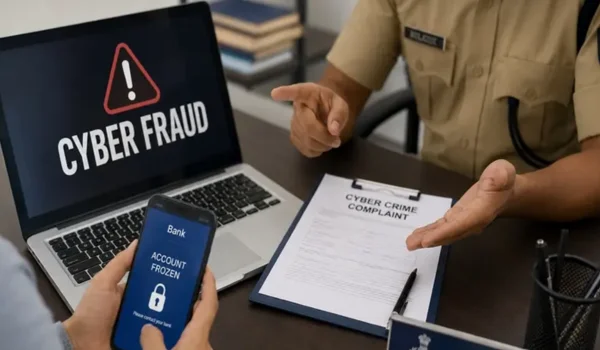
Online fraud is the use of digital platforms, communication systems or electronic transactions to deceive a person and obtain money, information or other benefits.
Common examples include:
- UPI fraud
- Fake payment requests
- OTP scams
- Phishing
- Fake shopping websites
- Fake customer-care numbers
- Investment scams
- Loan scams
- Job scams
- Social media scams
- Credit or debit card fraud
- Internet banking fraud
- Identity theft
- Fake KYC messages
- QR-code scams
- Cryptocurrency-related scams
The correct complaint process can depend on the type of fraud.
What to Do Immediately After Online Fraud
If money has been transferred without your permission or because of deception, do not wait.
Follow these steps as quickly as possible:
- Contact Your Bank or Payment Provider
Immediately report the fraudulent transaction to your bank, UPI provider, card issuer or relevant payment service.
Ask them to:
- Block or secure the affected account or card
- Mark the transaction as fraudulent
- Attempt appropriate transaction reversal or recovery measures
- Provide a complaint or reference number
Do not share your OTP, PIN, password or UPI PIN with anyone claiming to help recover your money.
- Call 1930
For cyber financial fraud in India, you can report the incident through the National Cyber Crime Helpline at 1930.
The system is designed to facilitate quick reporting of financial cyber fraud so that appropriate action can be initiated.
When calling, keep information such as the transaction amount, transaction ID and bank details ready.
- File a Cybercrime Complaint Online
You can also report cybercrime through the Government of India’s National Cyber Crime Reporting Portal.
National Cyber Crime Reporting Portal (https://cybercrime.gov.in/)
Use the official government website rather than links received through messages or social media.
How to File an Online Fraud Complaint
The general online process is:
Step 1: Visit the Official Portal
Open the National Cyber Crime Reporting Portal.
Step 2: Select the Appropriate Complaint Category
Choose the option related to financial fraud or the type of cybercrime involved.
Step 3: Provide Your Details
You may need to provide:
- Name
- Mobile number
- Address
- Identification details where required
- Incident information
Step 4: Enter Transaction Details
Provide accurate information about:
- Date and time
- Amount lost
- Bank or payment platform
- Transaction ID
- UTR/reference number
- Account details, where applicable
Step 5: Upload Evidence
Attach available evidence such as screenshots, messages, payment records and other relevant documents.
Step 6: Submit the Complaint
After submitting the complaint, save the acknowledgement or complaint number.
You can use the available tracking facility to check the status of the complaint.
How to Recover Money Lost in Online Fraud
There is no guaranteed method to recover every amount lost through online fraud.
However, quick reporting can be important.
The possible recovery process may involve:
Victim reports fraud → Bank/payment provider is informed → Cybercrime authorities receive complaint → Transaction may be traced or funds may be placed on hold where possible → Investigation and legal process → Recovery if funds are successfully secured
If the money has already moved through multiple accounts or been withdrawn, recovery can become more difficult.
Why Immediate Reporting Matters
Fraudulent funds may be transferred quickly through multiple bank accounts, wallets or other channels.
A delay can reduce the possibility of securing the money before it is moved further.
Therefore, do not wait until the next day if a fraudulent transaction has occurred.
Can a Bank Refund Money Lost in Online Fraud?
A bank does not automatically refund every fraudulent transaction.
The outcome can depend on:
- How the transaction occurred
- Whether it was authorised or unauthorised
- How quickly it was reported
- Whether the customer shared credentials
- Applicable RBI rules
- Bank investigation
- Payment system involved
- Other facts of the transaction
For unauthorised electronic banking transactions, RBI has specific customer-protection rules concerning liability in certain circumstances.
Customers should report unauthorised transactions to their bank immediately and follow the bank’s instructions.
UPI Fraud Complaint
UPI fraud can involve:
- Fake collect requests
- Fake QR codes
- Fraudulent payment links
- Impersonation
- Fake customer support
- Social engineering
- Requests to enter a UPI PIN
Remember an important point:
You do not normally need to enter your UPI PIN to receive money.
The UPI PIN is generally used to authorise a payment.
If you have made a fraudulent UPI payment, immediately report it to your bank and the relevant UPI service provider, and also report the incident through 1930 and the cybercrime portal.
Credit Card or Debit Card Fraud
If an unknown transaction appears on your card:
- Contact the card issuer immediately.
- Block or temporarily disable the card if necessary.
- Report the transaction as unauthorised.
- Ask for a complaint/reference number.
- Follow the bank’s dispute process.
- File a cybercrime complaint where appropriate.
Keep screenshots and transaction statements.
OTP Fraud
Banks and legitimate financial institutions generally do not ask customers to disclose their OTP, PIN or password.
If you have accidentally disclosed an OTP or banking credentials:
- Contact the bank immediately.
- Secure the account.
- Change relevant passwords.
- Block cards where necessary.
- Report fraudulent transactions.
- File a cybercrime complaint.
Do not continue communicating with the suspected fraudster.
Fake Customer-Care Fraud
Scammers sometimes publish fake customer-care numbers online.
A person may call the number and be asked to:
- Install remote-access software
- Share OTP
- Share card details
- Transfer money
- Approve a UPI request
Use only the contact details available through the company’s official website or application.
Investment and Trading Fraud
Online investment scams may promise:
- Guaranteed returns
- Very high profits
- Exclusive trading tips
- Fake stock-market accounts
- Fake cryptocurrency investments
- Withdrawal bonuses
If money has been lost, preserve all communication, payment records, account details and screenshots.
Do not send additional money simply because the fraudster promises that it will “unlock” your previous funds.
Evidence Required for Online Fraud Complaint
Keep as much evidence as possible.
Important evidence can include:
- Bank statement
- UPI transaction record
- Transaction ID
- UTR number
- SMS alerts
- Email messages
- WhatsApp chats
- Telegram messages
- Screenshots
- Website URLs
- Phone numbers
- Email addresses
- Social-media profiles
- Payment receipts
- Call details
- Account numbers or UPI IDs used by the fraudster
Do not edit or manipulate screenshots.
Keep original files wherever possible.
Should You Report Fraud to the Police?
Yes, depending on the circumstances, you may also approach the local police.
Cybercrime authorities and police can investigate offences under applicable criminal and cyber laws.
If the matter requires formal police action, provide your cybercrime complaint number and supporting evidence.
For serious or complex fraud, consulting a lawyer can also help you understand available legal remedies.
What If the Bank Does Not Resolve the Complaint?
First, follow the bank’s internal complaint and grievance process.
If the issue remains unresolved, customers may have recourse through the Reserve Bank of India’s Integrated Ombudsman Scheme, where the complaint meets the scheme’s requirements.
The RBI’s official complaint mechanism is available through its website.
RBI Complaint Management System (https://cms.rbi.org.in/)
The RBI Ombudsman process is not a replacement for a cybercrime investigation, but it can provide a separate grievance mechanism for eligible complaints against regulated entities.
Can Online Fraud Money Be Recovered?
Recovery is possible in some cases, but it is not guaranteed.
The chances can depend on:
- How quickly the fraud was reported
- Whether the money is still traceable
- Whether the recipient account can be identified
- Whether funds can be placed on hold
- Bank and payment-system cooperation
- Investigation results
- Court or other legal proceedings
The most important step is therefore to report the fraud immediately.
Common Mistakes After Online Fraud
Waiting to Report
Do not wait for the fraudster to return the money.
Paying a Recovery Agent
Scammers may contact victims claiming they can recover the money for a fee.
Be extremely careful with such offers.
Deleting Evidence
Keep messages, screenshots and transaction records.
Sharing More Information
Do not provide OTPs, passwords, PINs or additional financial details.
Continuing Communication
Avoid negotiating with the fraudster.
Using Unofficial Websites
Use official government and bank websites for complaints and support.
Frequently Asked Questions
What is the number for reporting online financial fraud in India?
The national cyber financial fraud reporting helpline is 1930.
Where can I file a cybercrime complaint online?
You can use the Government of India’s National Cyber Crime Reporting Portal at cybercrime.gov.in.
Can I recover money after UPI fraud?
Recovery may be possible in some cases, but it is not guaranteed. Report the transaction to your bank and cybercrime authorities immediately.
Can a bank reverse a fraudulent transaction?
Depending on the circumstances and applicable banking rules, the bank may investigate and take appropriate action. A refund is not automatic in every case.
What should I do if I shared my OTP?
Immediately contact your bank, secure the affected account and report any unauthorised transactions. Also report the incident through the appropriate cybercrime channel.
Can I file a complaint after several days?
Yes, you should still report the fraud even if some time has passed. However, immediate reporting is generally better because fraudulent funds can move quickly.
Should I pay someone who promises to recover my money?
Be very cautious. Fraud victims are sometimes targeted again by people claiming to be recovery agents.
Final Verdict
If you become a victim of online fraud in India, act immediately rather than waiting.
The basic response should be:
Contact bank/payment provider → Call 1930 → File complaint at cybercrime.gov.in → Save complaint number → Preserve evidence → Follow up with bank and authorities
You should also secure your bank accounts, cards and online accounts and avoid sharing additional financial information.
Remember that reporting a fraud does not guarantee recovery, but early reporting can give banks and authorities a better opportunity to trace or secure fraudulent funds.
This article is for general educational purposes and is not legal or financial advice. Cybercrime procedures, banking rules and available remedies can change. For a serious financial fraud or complex legal dispute, consider obtaining professional legal assistance.