






A cheque bounce happens when a bank does not honour a cheque presented for payment. One of the most important laws dealing with cheque dishonour in India is Section 138 of the Negotiable Instruments Act, 1881.
Section 138 can apply when a cheque issued for a legally enforceable debt or liability is returned unpaid for reasons covered by the law, subject to the statutory conditions and timelines.
A cheque bounce does not automatically mean that the person who issued the cheque will be convicted. The person receiving the cheque must follow the required legal process and establish the necessary conditions.
This guide explains Section 138, cheque bounce process, legal notice, timelines, punishment, complaint procedure, defence and frequently asked questions.
What Is a Cheque Bounce?
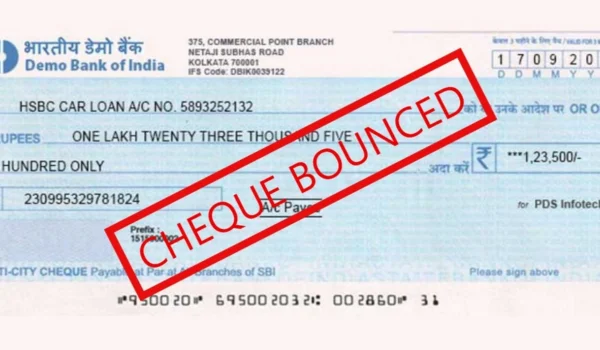
A cheque is said to have bounced when the bank returns it unpaid instead of making payment.
Common reasons can include:
- Insufficient funds
- Account closed
- Payment stopped
- Signature-related issues
- Exceeds arrangement
- Other reasons recognised by banking procedures
However, not every returned cheque automatically results in an offence under Section 138.
The specific reason for dishonour and the surrounding facts matter.
What Is Section 138 of the Negotiable Instruments Act?
Section 138 of the Negotiable Instruments Act, 1881 deals with dishonour of cheques for insufficiency of funds or where the amount exceeds the arrangement made with the bank, subject to the statutory requirements.
For Section 138 to apply, the cheque generally must have been issued for the discharge, wholly or partly, of a legally enforceable debt or other liability.
The cheque must also be presented within the legally prescribed period, and the required notice and complaint timelines must be followed.
Conditions for a Cheque Bounce Case Under Section 138
A Section 138 case generally involves the following requirements:
- Cheque Was Issued
The accused must have drawn the cheque on an account maintained by them.
- Legally Enforceable Debt or Liability
The cheque must relate to a legally enforceable debt or other liability.
A cheque given for every possible purpose will not automatically satisfy this requirement.
- Cheque Was Presented Within the Applicable Period
The cheque must be presented within its validity period.
Under current banking rules, cheques are generally presented within three months from the date of the cheque, subject to applicable RBI directions and banking practice.
- Cheque Was Dishonoured
The bank must return the cheque unpaid for a reason falling within the scope of Section 138.
- Demand Notice Is Sent
The payee or holder in due course must issue a written demand notice within the statutory period after receiving information from the bank regarding dishonour.
- Payment Is Not Made
The drawer must fail to make payment within the statutory period after receiving the notice.
- Complaint Is Filed Within Limitation
The complaint must then be filed within the applicable statutory period, subject to legally available extension or condonation where permitted.
Cheque Bounce Process in India
The general process can be understood in stages.
Step 1: Present the Cheque
The payee deposits the cheque with the bank.
Step 2: Bank Returns the Cheque
If the cheque is dishonoured, the bank issues a return memo explaining the reason.
Keep the original cheque and return memo safely.
Step 3: Send Legal Demand Notice
The payee must generally send a written demand notice to the drawer within 30 days of receiving information from the bank about the dishonour.
The notice should clearly demand payment of the cheque amount.
Step 4: Wait for the Statutory Period
The drawer gets 15 days from receipt of the notice to make payment.
If the payment is made within this period, the statutory offence under Section 138 may not be completed on that basis.
Step 5: File a Complaint
If payment is not made within the required period, the payee may file a complaint before the competent court, subject to the statutory limitation period.
Cheque Bounce Notice
The legal notice is an important part of a Section 138 case.
A typical notice may mention:
- Date of cheque
- Cheque number
- Amount
- Bank details
- Date of presentation
- Date of dishonour
- Reason for dishonour
- Demand for payment
- Statutory deadline
- Consequences of non-payment
The notice should be factually accurate and comply with the applicable legal requirements.
Sample Cheque Bounce Notice Format
A simple structure can look like this:
LEGAL DEMAND NOTICE
To:
[Drawer’s Name and Address]
Subject: Demand for Payment of Dishonoured Cheque
Sir/Madam,
You issued cheque no. [Number], dated [Date], for ₹[Amount] towards discharge of a legally enforceable debt/liability.
The cheque was presented for payment but was returned unpaid by the bank on [Date] with the reason [Reason].
You are hereby called upon to pay the cheque amount within the statutory period from receipt of this notice.
If payment is not made within the applicable period, appropriate legal proceedings may be initiated under the Negotiable Instruments Act and other applicable law.
Date:
Sender/Advocate:
Address:
This is only a general example. A statutory notice should be drafted according to the actual facts and legal requirements.
How Much Time Is Given After the Notice?
The drawer generally has 15 days from the date of receipt of the statutory notice to make payment of the cheque amount.
The date of receipt and other procedural details can become important when calculating limitation.
This is one reason why cheque bounce cases should not be handled casually.
What Happens If Payment Is Not Made?
If the drawer does not make payment within the statutory period, the payee can initiate a complaint under Section 138, provided all legal requirements are satisfied.
The complaint is filed before the court having appropriate jurisdiction.
The court then follows the applicable criminal procedure.
Which Court Handles Cheque Bounce Cases?
Cheque dishonour complaints are generally dealt with by the Magistrate’s court having the appropriate jurisdiction.
Jurisdiction in cheque cases has specific statutory rules.
Under the Negotiable Instruments Act, jurisdiction can depend on factors such as the bank branch where the payee maintains the relevant account and, in certain situations, the branch of the drawee bank.
The correct court should therefore be identified before filing.
Punishment for Cheque Bounce Under Section 138
Section 138 provides for:
- Imprisonment for a term which may extend to two years, or
- Fine which may extend to twice the amount of the cheque, or
- Both.
The punishment is not automatically imposed merely because a cheque bounced.
The court considers the evidence and legal requirements before deciding the case.
Can the Drawer Go to Jail for a Cheque Bounce?
Yes, imprisonment is legally possible under Section 138.
However, a cheque bounce case does not mean that the drawer automatically goes to jail.
The court must consider the case, evidence and applicable law.
Many cheque disputes are also resolved through payment or settlement.
Is Cheque Bounce a Criminal Offence?
A cheque dishonour falling within Section 138 can constitute a criminal offence, provided the statutory conditions are fulfilled.
At the same time, the underlying transaction may also give rise to separate civil remedies in appropriate circumstances.
The criminal complaint under Section 138 and a civil recovery claim are distinct legal remedies.
Can a Cheque Bounce Case Be Settled?
Yes.
Cheque bounce matters can be settled between the parties.
Settlement may involve:
- Full payment
- Payment in instalments
- Agreed settlement amount
- Withdrawal or appropriate disposal of proceedings according to court procedure
Because the case is before a court, the settlement should be properly recorded according to the applicable procedure.
What Happens After Filing a Cheque Bounce Complaint?
The exact procedure can vary, but broadly the court may:
- Examine the complaint and supporting documents.
- Consider whether the statutory requirements are satisfied.
- Issue process where appropriate.
- Require the accused to appear.
- Conduct proceedings according to the applicable law.
- Consider evidence and defences.
- Deliver the appropriate order or judgment.
Section 138 proceedings have also been subject to legislative and judicial measures intended to encourage faster disposal.
Presumption in Favour of the Cheque Holder
The Negotiable Instruments Act contains important presumptions regarding negotiable instruments.
Under Sections 118 and 139, once the relevant foundational facts are established, the law provides presumptions that can operate in favour of the holder.
For example, Section 139 creates a presumption that the holder received the cheque for discharge of a debt or other liability, unless the contrary is proved.
This does not mean the accused has no defence.
The accused can challenge the presumption through legally acceptable evidence and circumstances.
Common Defences in Cheque Bounce Cases
Depending on the facts, a drawer may raise issues such as:
- No legally enforceable debt existed
- Cheque was not issued for the alleged liability
- Amount was already paid
- Cheque was materially altered
- Cheque was misused
- Statutory notice requirements were not fulfilled
- Complaint was filed beyond limitation
- Signature or issuance of cheque is disputed
- Other legal or factual defects exist
The strength of a defence depends on the evidence available.
What Evidence Is Useful?
A cheque bounce case can involve:
- Original cheque
- Bank return memo
- Legal notice
- Postal receipt
- Delivery proof
- Loan agreement
- Invoice
- Bank statement
- Payment records
- Emails
- Messages
- Account statements
- Other documents showing the underlying transaction
Keep original documents safely.
Can a Security Cheque Lead to a Section 138 Case?
A cheque described as a “security cheque” does not automatically fall outside Section 138.
The important question can be whether, when the cheque became payable and was presented, it represented a legally enforceable debt or liability.
Courts have considered different factual situations involving security cheques.
Therefore, simply calling a cheque a “security cheque” does not by itself decide the case.
What If the Cheque Was Lost?
If a cheque is lost before presentation, immediately inform the bank and take appropriate precautions.
If a lost cheque is later misused, the circumstances and evidence become important.
Maintain records of communications with the bank and other relevant parties.
Common Mistakes in Cheque Bounce Cases
Missing the Notice Deadline
The statutory notice period is important.
Filing the Complaint Too Late
Limitation requirements must be carefully calculated.
Losing the Return Memo
The bank’s dishonour record can be important evidence.
Ignoring the Underlying Debt
The existence of a legally enforceable liability is central to Section 138.
Using an Incorrect Address
Proper service of the statutory notice can become an important issue.
Assuming Every Dishonoured Cheque Is an Offence
Section 138 has specific statutory requirements.
Frequently Asked Questions
How long do I have to send a cheque bounce notice?
Generally, the statutory demand notice must be issued within 30 days of receiving information from the bank regarding dishonour.
How long does the drawer get to pay?
The drawer generally gets 15 days from receipt of the notice to make payment.
What happens if payment is made within 15 days?
Where the statutory conditions are otherwise relevant, payment within the prescribed period generally prevents the offence under Section 138 from being completed on that dishonour.
What is the maximum punishment?
Section 138 provides imprisonment of up to two years, or a fine up to twice the cheque amount, or both.
Can I recover the money through a cheque bounce case?
A Section 138 proceeding can have financial consequences for the drawer, but recovery is not automatic. Courts may also consider compensation and other reliefs according to law.
Can a cheque bounce case be settled?
Yes. Parties can settle cheque dishonour disputes, subject to the appropriate legal procedure.
Is a lawyer required?
A person may have options for conducting proceedings personally, but because Section 138 has strict timelines and procedural requirements, legal assistance can be useful.
Final Verdict
A cheque bounce case under Section 138 of the Negotiable Instruments Act involves strict legal requirements and timelines.
The basic process is:
Cheque issued → Cheque presented → Cheque dishonoured → Demand notice within 30 days → 15-day payment period → Complaint if payment is not made → Court proceedings
The maximum punishment under Section 138 can extend to two years’ imprisonment, a fine up to twice the cheque amount, or both, but conviction depends on establishing the required legal conditions.
If you receive or issue a dishonoured cheque, keep the cheque, bank return memo, transaction documents and communication records safely. Because statutory deadlines are important, obtain professional legal advice promptly when a cheque dispute arises.
This article is for general educational purposes and is not legal advice. Cheque dishonour cases involve specific statutory timelines and procedural requirements. The latest law and the facts of the individual case should be checked before taking legal action.