





Protein is an important nutrient that helps the body build and maintain muscles, repair tissues and support normal body functions. For people in India, getting enough protein does not always require expensive or imported foods. Many common Indian foods are naturally good sources of protein.
Both vegetarian and non-vegetarian diets can provide protein. Lentils, beans, dairy products, soy foods, nuts and seeds are useful vegetarian options, while eggs, fish, chicken and other meats provide animal-based protein.
The amount of protein a person needs depends on factors such as age, body size, activity level and overall health. This guide focuses on commonly available Indian foods that can help increase protein intake as part of a balanced diet.
Why Is Protein Important?
Protein is made up of amino acids that the body uses for many important functions.
It helps with:
- Maintaining muscles
- Repairing body tissues
- Supporting normal growth
- Producing enzymes and hormones
- Supporting the immune system
- Helping you feel full after meals
Protein is only one part of a healthy diet. A balanced eating pattern should also include vegetables, fruits, whole grains or other suitable carbohydrates, healthy fats and adequate fluids.
High-Protein Indian Foods – Quick Comparison
| Food | Category | Common Uses |
| Moong Dal | Vegetarian | Dal, cheela |
| Masoor Dal | Vegetarian | Dal, soup |
| Rajma | Vegetarian | Rajma curry |
| Chickpeas | Vegetarian | Chole, chaat |
| Soy Chunks | Vegetarian | Curry, pulao |
| Tofu | Vegetarian | Curry, bhurji |
| Paneer | Vegetarian | Curry, tikka |
| Curd | Vegetarian | Raita, meals |
| Greek Yogurt | Vegetarian | Breakfast, snacks |
| Sattu | Vegetarian | Drinks, paratha |
| Peanuts | Vegetarian | Snacks, chutney |
| Eggs | Non-vegetarian | Omelette, curry |
| Chicken | Non-vegetarian | Curry, tikka |
| Fish | Non-vegetarian | Curry, grilled |
| Prawns | Non-vegetarian | Curry, stir-fry |
| Lean Meat | Non-vegetarian | Curry, grilled |
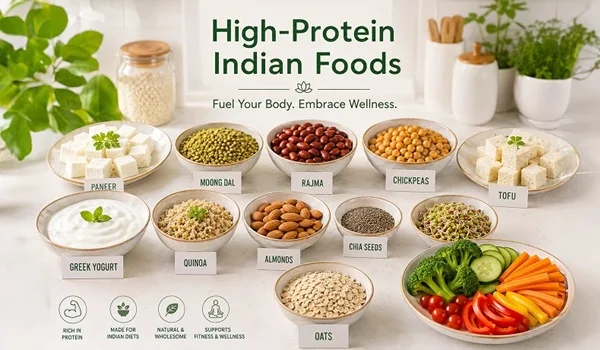
High-Protein Vegetarian Foods in India
- Dal
Dal is one of the most common sources of plant protein in Indian households.
Popular options include:
- Moong dal
- Masoor dal
- Toor dal
- Urad dal
- Chana dal
Dal can be eaten with rice, roti or vegetables.
Tip: Combining dal with other foods in a balanced meal can improve overall nutritional variety.
- Rajma
Rajma, or kidney beans, is a popular source of plant protein and dietary fibre.
A bowl of rajma can be paired with:
- Brown or regular rice
- Roti
- Salad
- Vegetables
Rajma is also filling because it contains both protein and fibre.
- Chole and Chickpeas
Chickpeas are another useful vegetarian protein source.
They can be prepared as:
- Chole
- Chana masala
- Boiled chickpea salad
- Chana chaat
- Hummus-style preparations
Chickpeas also provide fibre and several micronutrients.
- Soybeans
Soybeans are among the more protein-rich plant foods.
Soy can be consumed in different forms, including:
- Whole soybeans
- Soy chunks
- Tofu
- Soy milk
- Tempeh
Soy chunks are commonly used in Indian vegetarian cooking as a meat substitute.
- Tofu
Tofu is made from soybeans and can be used in many Indian dishes.
Try tofu in:
- Tofu bhurji
- Tofu curry
- Stir-fried vegetables
- Tofu wraps
It can be especially useful for people looking for plant-based protein options.
- Paneer
Paneer is a popular dairy food in India and provides protein along with other nutrients.
It can be used in:
- Paneer bhurji
- Paneer tikka
- Palak paneer
- Paneer curry
- Paneer sandwiches
The nutritional profile can vary depending on the type and preparation.
- Greek Yogurt and Curd
Curd is commonly eaten with Indian meals, while Greek yogurt generally contains more protein per serving than regular curd.
They can be used with:
- Fruits
- Oats
- Paratha
- Rice meals
- Homemade raita
Choose unsweetened options when you want to limit added sugar.
- Milk
Milk provides protein along with calcium and other nutrients.
It can be consumed directly or used in:
- Oats
- Smoothies
- Tea or coffee
- Homemade shakes
People who do not consume dairy can consider fortified plant-based alternatives.
- Peanuts
Peanuts provide protein, fats and calories.
They can be eaten as:
- Roasted peanuts
- Peanut chaat
- Peanut chutney
- Peanut butter
- Toppings for poha or salads
Because peanuts are calorie-dense, portion size is worth considering.
- Almonds and Other Nuts
Nuts provide some protein along with healthy fats.
Useful options include:
- Almonds
- Pistachios
- Cashews
- Walnuts
They can be added to breakfast or eaten as a snack.
However, nuts are energy-dense, so moderate portions are generally practical.
- Seeds
Seeds can add protein and other nutrients to meals.
Common choices include:
- Pumpkin seeds
- Sunflower seeds
- Chia seeds
- Flaxseeds
- Sesame seeds
They can be added to oats, yogurt, salads and smoothies.
- Sattu
Sattu is roasted gram flour and is a traditional food in several parts of India.
It can be used to prepare:
- Sattu drink
- Sattu paratha
- Sattu roti
- Sattu chilla
It is an affordable way to add plant protein to the diet.
High-Protein Non-Vegetarian Foods
- Eggs
Eggs are an accessible source of high-quality protein.
They can be prepared as:
- Boiled eggs
- Omelette
- Egg bhurji
- Egg curry
- Scrambled eggs
Adding vegetables to an omelette or bhurji can make the meal more varied.
- Chicken
Chicken is widely consumed in India and is a protein-rich food.
Common preparations include:
- Grilled chicken
- Chicken curry
- Tandoori chicken
- Chicken tikka
- Chicken soup
For a lighter meal, cooking methods such as grilling, baking or roasting can be used instead of deep frying.
- Fish
Fish provides protein and several types of fish are also sources of omega-3 fatty acids.
Popular Indian fish preparations include:
- Fish curry
- Grilled fish
- Fish fry
- Fish tikka
- Fish stew
The nutritional profile differs between fish varieties.
- Prawns
Prawns are another seafood option that provides protein.
They can be prepared as:
- Prawn curry
- Grilled prawns
- Prawn stir-fry
- Prawn masala
Cooking methods and sauces can significantly change the calorie and fat content of the final dish.
- Lean Meat
Lean cuts of meat can provide substantial protein.
Depending on dietary preferences, options include:
- Lean mutton
- Goat meat
- Other locally available lean meats
Choose cooking methods that do not rely heavily on added oil.
High-Protein Indian Breakfast Ideas
Breakfast is a good opportunity to include protein.
Some simple options are:
Moong Dal Cheela
Make cheela from soaked and ground moong dal and add vegetables.
Besan Chilla
Add onion, tomato, coriander and other vegetables to gram flour batter.
Eggs and Roti
Egg bhurji or an omelette with whole-wheat roti can make a filling breakfast.
Paneer Bhurji
Serve paneer bhurji with roti or toast.
Sprouts Chaat
Mix steamed sprouts with tomato, cucumber, onion and lemon.
Curd With Oats
Use plain curd or Greek yogurt with oats, seeds and fruit.
High-Protein Indian Lunch Ideas
A balanced Indian lunch can include several protein sources.
For example:
Option 1: Dal + rice + vegetables + curd
Option 2: Rajma + rice + salad
Option 3: Chole + roti + vegetables
Option 4: Paneer curry + roti + salad
Option 5: Chicken curry + roti + vegetables
Option 6: Fish curry + rice + vegetables
The goal is not to eat one specific “high-protein food” but to build a balanced meal.
High-Protein Snacks
If you need a protein-containing snack, consider:
- Roasted chana
- Roasted peanuts
- Boiled eggs
- Sprouts chaat
- Plain Greek yogurt
- Paneer cubes
- Milk
- Homemade besan chilla
Packaged snacks can also contain protein, but check their nutrition labels because some may be high in sugar, salt or saturated fat.
How Vegetarians Can Get Enough Protein
A vegetarian diet can provide adequate protein when it includes a variety of foods.
Try combining:
- Dal and rice
- Rajma and rice
- Chole and roti
- Paneer and vegetables
- Tofu and rice
- Curd with meals
- Soy foods with grains
You do not necessarily need protein supplements if your regular diet provides enough protein for your individual needs.
How to Increase Protein in Indian Meals
Small changes can increase protein intake without completely changing your diet.
Add Dal to Lunch
Include dal or another pulse with your regular rice or roti meal.
Add Curd
Plain curd or Greek yogurt can be included with lunch or dinner.
Add Paneer or Tofu
Use moderate portions in vegetable dishes.
Add Seeds
Sprinkle pumpkin, sunflower or other seeds over salads or yogurt.
Choose Protein-Based Breakfasts
Replace a very sugary breakfast with options such as cheela, eggs, sprouts or curd with oats.
Is High Protein Always Better?
Not necessarily.
Protein is important, but consuming extremely large amounts does not automatically make a diet healthier.
A balanced diet should also provide:
- Fibre
- Vitamins
- Minerals
- Healthy fats
- Suitable carbohydrates
- Adequate fluids
People with certain medical conditions may also need specific dietary advice from a qualified healthcare professional.
Frequently Asked Questions
Which Indian vegetarian food has high protein?
Soy foods, lentils, chickpeas, rajma, paneer, dairy products, peanuts and seeds are useful vegetarian protein sources.
Which Indian food is highest in protein?
The protein content varies by food and serving size. Soy products, certain lean meats, fish and other protein-rich foods can provide substantial amounts.
Is dal enough for protein?
Dal contributes protein, but the amount needed depends on the person’s overall diet and individual requirements. Combining different protein-containing foods can help create a balanced diet.
Are eggs a good source of protein?
Yes. Eggs provide high-quality protein and can be included in many meals.
Can vegetarians build muscle?
Yes. A well-planned vegetarian diet can provide the protein and energy needed to support muscle growth, along with appropriate strength training and recovery.
Is paneer a good source of protein?
Paneer provides protein, but its fat and calorie content can vary depending on how it is prepared and the type used.
Final Thoughts
India has many affordable and easily available high-protein foods for both vegetarians and non-vegetarians.
Vegetarian options include dal, rajma, chickpeas, soy, tofu, paneer, curd, sattu, peanuts and seeds. Non-vegetarian choices include eggs, chicken, fish, prawns and lean meat.
Instead of relying on one food, try to include different protein sources throughout the day. Combine protein-rich foods with vegetables, whole grains or other suitable carbohydrates and healthy fats for a balanced diet.
Individual protein needs are different. If you have a specific fitness, pregnancy, kidney, liver or other health-related dietary concern, speak with a qualified doctor or registered dietitian before making major changes to your diet.
This article is for general educational purposes and does not replace personalised medical or nutritional advice.