







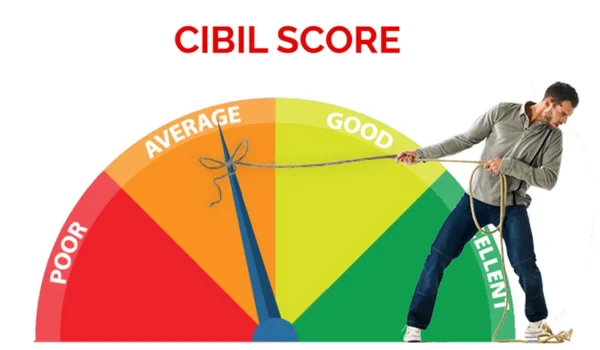
Your CIBIL Score can play an important role when you apply for a loan in India. Banks and NBFCs may check your credit history to understand how you have handled loans and credit cards in the past.
A strong credit profile can improve your chances of loan approval and may help you get better loan terms. A low score, on the other hand, can make borrowing more difficult or expensive.
The good news is that you can improve your credit profile by developing better repayment habits and correcting inaccurate information in your credit report.
This guide explains how to improve your CIBIL Score for a loan, how long it can take, what mistakes to avoid, and how to maintain a healthy credit profile.
What Is a CIBIL Score?
A CIBIL Score is a three-digit numerical summary of your credit history. It is generally based on information in your credit report, such as your repayment behaviour and credit accounts.
In India, credit scores are commonly reported on a scale of 300 to 900.
A higher score generally indicates a stronger credit history.
However, your CIBIL Score is not the only factor a lender considers. Banks and NBFCs can also look at:
- Income
- Employment or business stability
- Existing loans
- Monthly obligations
- Age
- Loan amount
- Repayment capacity
- Internal lending policies
Therefore, having a high CIBIL Score does not guarantee loan approval.
Why Is CIBIL Score Important for a Loan?
When you apply for a loan, the lender wants to know whether you are likely to repay the borrowed money on time.
Your credit history provides information about how you have handled credit in the past.
A healthy credit profile may help you:
- Improve your chances of approval
- Get more favourable loan terms
- Access higher credit limits
- Negotiate better interest rates in some cases
- Build stronger financial credibility
However, the exact impact of your CIBIL Score depends on the lender and the type of loan.
How to Improve CIBIL Score
Improving your score usually takes time. There is no genuine shortcut that can instantly increase it.
Here are some practical steps.
- Pay EMIs on Time
Payment history is one of the most important parts of your credit profile.
Missing a loan EMI can negatively affect your credit history.
To avoid missed payments:
- Set up automatic payments
- Keep sufficient balance in your bank account
- Note all EMI due dates
- Avoid waiting until the last day to make payment
Even a single missed payment can create problems, particularly if it becomes a serious or reported delinquency.
Make timely payments a long-term habit.
- Pay Your Credit Card Bills on Time
Credit cards are also part of your credit history.
Always pay at least the required amount by the due date, but paying the full outstanding amount can help you avoid unnecessary interest on revolving balances.
For example, if your credit-card bill is:
Total outstanding: ₹30,000
Paying the full ₹30,000 by the due date can help you avoid carrying the balance forward, subject to your card’s terms.
Do not regularly rely on minimum payments if you can afford to clear the full bill.
- Keep Credit Utilisation Low
Credit utilisation refers to how much of your available revolving credit you are using.
For example:
Credit-card limit: ₹1,00,000
Outstanding balance: ₹30,000
Your utilisation is:
₹30,000 ÷ ₹1,00,000 × 100 = 30%
Lower utilisation is generally viewed more positively than consistently using a very large portion of your available credit.
Avoid regularly keeping your credit cards near their maximum limits.
- Avoid Applying for Too Many Loans
Every time you make a formal application for credit, the lender may make a credit enquiry.
Making several loan or credit-card applications within a short period can result in multiple enquiries appearing on your credit report.
Instead of applying everywhere, first:
- Compare lenders.
- Check eligibility.
- Compare interest rates and charges.
- Apply only where you have a reasonable chance of approval.
Do not submit applications to many lenders simply to see who approves you.
- Check Your Credit Report for Errors
Sometimes your credit report may contain inaccurate information.
For example, you may find:
- A loan you never took
- Incorrect personal information
- Wrong outstanding balance
- Incorrect repayment status
- Duplicate accounts
- A loan shown as active even after closure
If you find an error, raise a dispute through the appropriate credit bureau or contact the relevant lender to have the information investigated and corrected.
This can be particularly important before applying for a major loan such as a home loan.
- Keep Old Credit Accounts Open When Appropriate
The age of your credit accounts can contribute to your overall credit history.
If an old credit card has no unnecessary cost and you have managed it responsibly, closing it may not always be beneficial.
However, don’t keep an expensive credit card only to protect your credit history.
Consider the annual fee, usefulness, credit limit and your overall financial situation before closing an account.
- Maintain a Healthy Mix of Credit
Your credit profile can contain different types of credit, such as:
- Personal loans
- Home loans
- Vehicle loans
- Credit cards
A responsible history across different types of credit can contribute to a well-established credit profile.
However, don’t take a loan simply to create a credit mix.
Borrow only when you genuinely need credit and can comfortably repay it.
- Reduce Existing Debt
If you already have several loans or high credit-card balances, reducing your outstanding debt can improve your overall financial position.
For example, suppose you have:
Personal loan EMI: ₹15,000
Car loan EMI: ₹12,000
Credit-card payment: ₹10,000
Your total monthly credit obligation may become difficult to manage.
Before taking another loan, consider whether you should reduce existing debt first.
A lower debt burden can also make your new loan application more comfortable from a repayment-capacity perspective.
- Don’t Settle Loans Unnecessarily
If you are unable to repay a loan, a lender may offer different ways to resolve the account.
However, borrowers should understand the difference between full repayment/closure and a settlement.
A loan marked as settled may be viewed differently by future lenders than an account that has been fully repaid according to the original terms.
If you are facing repayment difficulties, talk to your lender as early as possible rather than simply stopping payments.
- Maintain Stable Financial Habits
Improving your credit score is not about doing one thing for a few weeks.
You need consistent financial behaviour.
Good habits include:
- Paying EMIs on time
- Paying credit-card bills on time
- Keeping utilisation under control
- Avoiding unnecessary loans
- Checking your credit report
- Maintaining manageable debt
- Correcting inaccurate information
Over time, responsible behaviour can help build a stronger credit history.
How Long Does It Take to Improve CIBIL Score?
There is no fixed time period in which everyone’s score will increase.
It depends on:
- Your current score
- Previous payment history
- Outstanding debt
- Credit utilisation
- Number of accounts
- Recent enquiries
- Errors in your credit report
- How quickly corrected information is updated
If you recently missed an EMI, don’t expect the score to return to its previous level immediately after making the payment.
Credit history reflects behaviour over time.
The best approach is to maintain responsible credit habits consistently.
How to Improve CIBIL Score Before Applying for a Loan
If you are planning to apply for a loan soon, follow these steps.
Step 1: Check Your Credit Report
Review your credit accounts and repayment information.
Step 2: Look for Errors
Check whether any loan, credit card or outstanding balance is incorrectly reported.
Step 3: Pay Overdue Amounts
If you have overdue payments, resolve them as soon as possible.
Step 4: Reduce Credit-Card Balances
If your cards are heavily utilised, reduce the outstanding balances where financially possible.
Step 5: Avoid New Unnecessary Credit
Don’t apply for multiple credit cards or loans shortly before your major loan application.
Step 6: Keep EMI Payments Regular
Set reminders or automatic payments for existing loans.
Step 7: Apply Selectively
Compare lenders and apply only after checking their eligibility requirements.
Example: Improving Credit Utilisation
Suppose you have two credit cards.
Card 1 limit: ₹1,00,000
Card 2 limit: ₹50,000
Your total available credit is:
₹1,00,000 + ₹50,000 = ₹1,50,000
Suppose your total outstanding balance is:
₹90,000
Your utilisation is:
₹90,000 ÷ ₹1,50,000 × 100 = 60%
This is a relatively high level of utilisation.
If you reduce the outstanding balance to ₹30,000:
₹30,000 ÷ ₹1,50,000 × 100 = 20%
This gives you a much lower utilisation level.
The exact effect on your CIBIL Score cannot be guaranteed because credit scoring considers multiple factors.
Does Closing a Loan Improve CIBIL Score?
Closing a loan after successfully repaying it is generally positive because the account is recorded as completed according to the lender’s reporting.
However, closing a loan does not necessarily mean your CIBIL Score will immediately increase.
Your score depends on your overall credit history.
For example, if you have:
- Several overdue accounts
- High credit utilisation
- Multiple recent enquiries
closing one loan may not solve the overall credit-profile issues.
Does Checking Your Own CIBIL Score Reduce It?
Checking your own credit report is different from applying for multiple loans.
A self-check is generally not treated the same way as a lender’s hard enquiry for a credit application.
Regularly checking your own credit report can therefore be useful for monitoring your information and identifying errors.
Common Mistakes That Can Hurt Your Credit Profile
Avoid these mistakes:
Paying EMIs Late
Late payments can negatively affect your credit history.
Using Almost the Entire Credit Limit
Consistently high credit utilisation can be a warning sign.
Applying for Too Many Loans
Multiple credit applications can result in several enquiries.
Ignoring Credit Report Errors
Incorrect information can affect your credit profile if it remains unresolved.
Taking Loans You Don’t Need
Every loan creates another repayment obligation.
Making Only Minimum Credit-Card Payments
Minimum payments can allow the balance to continue accumulating interest.
Ignoring Existing Debt
Taking another loan while already struggling with repayments can increase financial stress.
CIBIL Score and Different Types of Loans
The importance of credit history can vary depending on the loan.
For example:
Personal Loan
Credit profile can be particularly important because personal loans are generally unsecured.
Home Loan
Lenders can consider your credit score along with income, property details, down payment and repayment capacity.
Vehicle Loan
Credit history, income and vehicle details may all influence the application.
Business Loan
Lenders may consider both the business’s financial performance and the owner’s credit profile, depending on the business structure and loan.
Gold Loan
Because gold is provided as security, the assessment can differ from an unsecured loan. However, the lender still has its own eligibility and KYC requirements.
Frequently Asked Questions
What is a good CIBIL Score for a loan?
A score closer to the upper end of the 300–900 range is generally considered stronger. However, there is no universal score that guarantees loan approval.
Each lender has its own eligibility criteria.
Can I improve my CIBIL Score quickly?
There is no guaranteed instant method. The most reliable approach is to pay your EMIs and credit-card bills on time, reduce excessive utilisation, avoid unnecessary credit applications and correct errors in your credit report.
Does paying a loan EMI early improve CIBIL Score?
Making your EMI payment on or before the due date is important. However, simply paying an EMI earlier than its due date does not guarantee a specific increase in your score.
Can I get a loan with a low CIBIL Score?
Possibly. Loan approval depends on the lender, loan type, income, existing debt, collateral and other factors. However, a low score can make borrowing more difficult or expensive.
How often should I check my credit report?
Checking periodically can help you identify incorrect accounts, overdue amounts or suspicious activity. You should also consider checking it before applying for a major loan.
Final Words
Improving your CIBIL Score for a loan is mainly about building consistent credit habits. There is no genuine shortcut that can instantly transform a poor credit history into an excellent one.
Focus on the basics:
- Pay EMIs on time
- Pay credit-card bills on time
- Keep credit utilisation under control
- Avoid unnecessary loan applications
- Check your credit report regularly
- Correct inaccurate information
- Reduce excessive debt
- Borrow only what you can repay
Remember that your CIBIL Score is only one part of a loan application. Lenders can also consider your income, employment or business stability, existing obligations, loan amount and their own lending policies.
If you are planning to apply for a major loan, improving your overall financial profile well before the application can put you in a stronger position.