







A health insurance policy can help reduce the financial burden of hospitalisation, but knowing how to file a health insurance claim is equally important. Many policyholders become confused about the difference between cashless claims and reimbursement claims.
The basic process is simple when you understand what documents are required, when to inform the insurer and what expenses are actually covered under your policy.
This guide explains the health insurance claim process in India, including cashless treatment, reimbursement claims, required documents, claim rejection reasons and important tips to avoid problems.
What Is a Health Insurance Claim?
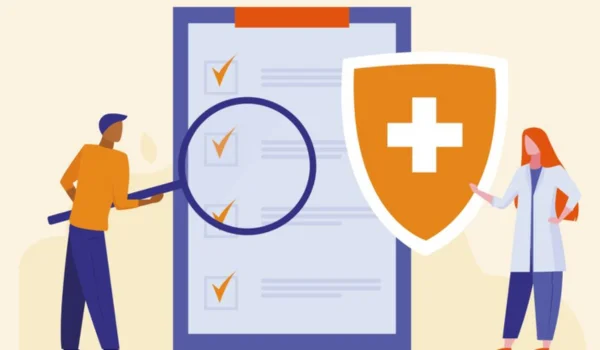
A health insurance claim is a formal request made by the policyholder or insured person to the insurer for payment of eligible medical expenses covered under the health insurance policy.
There are generally two ways to claim:
- Cashless Claim
- Reimbursement Claim
Both methods are subject to the terms, conditions, limits and exclusions of the policy.
Cashless Health Insurance Claim
A cashless claim allows an insured person to receive treatment at an eligible network hospital without paying the entire eligible hospital bill upfront.
The insurer or its authorised claims administrator coordinates with the hospital for settlement of approved expenses.
However, cashless does not mean completely free treatment.
You may still have to pay for:
- Deductibles
- Co-payment
- Non-covered expenses
- Policy exclusions
- Expenses above the sum insured
- Items outside applicable limits
How Does Cashless Claim Work?
The process generally follows these steps.
Step 1: Choose a Network Hospital
Before planned treatment, check whether the hospital is part of the insurer’s current cashless network.
Hospital networks can change, so verify the status before admission.
Step 2: Inform the Insurer
For planned hospitalisation, notify the insurer or claims administrator within the applicable time period mentioned in the policy.
The hospital’s insurance desk may also help with the process.
Step 3: Submit the Pre-Authorisation Request
The hospital generally sends the required medical and treatment details to the insurer or claims administrator.
This is used to assess whether cashless treatment can be authorised.
Step 4: Receive Approval
If approved, the insurer authorises treatment subject to the policy’s coverage and limits.
Approval may be:
- Full
- Partial
- Subject to conditions
- Delayed pending additional information
Step 5: Complete Treatment
The patient receives treatment according to the doctor’s advice.
The hospital sends relevant bills and documents to the insurer or claims administrator.
Step 6: Pay Non-Covered Expenses
At discharge, the insured may need to pay expenses that are not covered under the policy.
Step 7: Discharge
After the insurer’s applicable approval and hospital formalities are completed, the patient can be discharged.
Cashless Claim for Emergency Hospitalisation
Emergencies are different from planned treatment.
If you are admitted to a network hospital due to an emergency:
Go to the hospital first.
Inform the insurer or claims administrator as soon as reasonably possible according to the policy’s notification requirements.
The hospital may initiate the cashless process after admission.
The insurer can request medical documents and other information before approving the claim.
Do not delay emergency treatment just because insurance approval has not yet been completed.
Reimbursement Health Insurance Claim
A reimbursement claim is used when the insured person pays the eligible hospital expenses first and later submits a claim to the insurer.
This can happen when:
- Treatment is taken at a non-network hospital
- Cashless treatment is unavailable
- Cashless approval is not obtained
- The policyholder chooses to pay and claim later
The insurer reviews the submitted documents and reimburses the eligible amount according to the policy.
How Does Reimbursement Claim Work?
Step 1: Inform the Insurer
Notify the insurer about the hospitalisation according to the policy’s applicable timelines.
Step 2: Take Treatment
Pay the hospital according to the applicable billing process.
Step 3: Collect Documents
Keep all important documents safely.
These may include:
- Hospital bills
- Payment receipts
- Discharge summary
- Prescriptions
- Medical reports
- Investigation reports
- Pharmacy bills
- Claim form
Step 4: Submit the Claim
Submit the required documents through the insurer’s available claim process.
Step 5: Claim Assessment
The insurer reviews the claim and checks whether the expenses are covered.
Step 6: Reimbursement
If approved, the insurer pays the eligible amount according to the policy terms.
Cashless vs Reimbursement Claim
| Feature | Cashless Claim | Reimbursement Claim |
| Initial payment | Usually lower for covered expenses | Policyholder generally pays first |
| Hospital | Usually network hospital | May be available for eligible non-network treatment depending on policy |
| Pre-authorisation | Generally required | Usually not applicable in the same way |
| Documents | Hospital and insurer coordinate | Policyholder submits documents |
| Convenience | Generally higher | Requires more paperwork |
| Final payment | Insurer settles approved amount with hospital | Insurer reimburses approved amount to policyholder |
What Documents Are Required for a Health Insurance Claim?
The exact requirements depend on the insurer and claim type.
Common documents can include:
- Health insurance card or policy details
- Claim form
- Aadhaar or other identity document, where required
- Hospital bills
- Payment receipts
- Discharge summary
- Doctor’s prescription
- Investigation reports
- Diagnostic reports
- Pharmacy bills
- Medical records
- Bank details for reimbursement
- FIR or medico-legal documents in applicable cases
Do not submit fake or altered documents.
False information can lead to claim problems and other consequences.
What Is Pre-Authorisation?
Pre-authorisation is the process through which an insurer or claims administrator reviews a planned cashless hospitalisation before approving eligible treatment expenses.
The hospital generally submits:
- Patient information
- Diagnosis
- Proposed treatment
- Estimated expenses
- Medical reports
The insurer reviews the information and decides whether to approve the cashless request according to the policy.
Pre-authorisation does not necessarily mean that every final hospital expense will be paid.
What Happens If Cashless Claim Is Rejected?
A cashless request can be denied for several reasons.
For example:
- Treatment may not be covered
- Waiting period may apply
- Policy may have expired
- Hospital may not be eligible for cashless treatment
- Required information may be incomplete
- The condition may fall under an exclusion
- Available coverage may be insufficient
A cashless denial does not always mean that the medical treatment itself is not covered.
Depending on the circumstances and policy terms, you may be able to pay the hospital and submit a reimbursement claim.
Ask the insurer for the reason for the denial and understand the available claim options.
Common Reasons for Health Insurance Claim Rejection
- Policy Exclusion
The treatment may be specifically excluded.
- Waiting Period
The treatment may fall within an applicable waiting period.
- Non-Disclosure
Important medical information may not have been disclosed when purchasing the policy.
- Policy Lapse
The policy may not be active because premiums were not paid according to the policy conditions.
- Insufficient Documents
Required information or documents may be missing.
- Treatment Not Medically Covered
Some procedures or expenses may not fall within the policy’s coverage.
- Exceeding Policy Limits
The claim may exceed:
- Sum insured
- Room-rent limit
- Disease-specific limit
- Other applicable sub-limits
- Non-Medical Expenses
Certain hospital charges may not be covered even when the main treatment is covered.
What Are Non-Medical Expenses?
Non-medical expenses are charges that may not be covered under a health insurance policy.
Depending on the policy, examples can include certain:
- Administrative charges
- Personal-use items
- Convenience charges
- Service charges
- Consumables
The exact list differs between policies.
Check your policy wording rather than assuming every hospital bill is covered.
What Is a Deductible?
A deductible is the amount that the insured must bear before the insurer pays an eligible claim, according to the policy terms.
For example, if a policy has a ₹10,000 deductible and an eligible claim is ₹1 lakh:
Policyholder’s deductible = ₹10,000
Remaining eligible amount = ₹90,000
Other policy conditions may still apply.
What Is Co-Payment?
A co-payment means the insured agrees to pay a specified percentage of an eligible claim.
For example:
Eligible claim = ₹1,00,000
Co-payment = 20%
The insured’s share could be:
₹20,000
and the insurer’s share:
₹80,000
subject to the policy’s terms and limits.
How Long Does a Health Insurance Claim Take?
The claim processing time depends on:
- Claim type
- Completeness of documents
- Insurer
- Complexity of treatment
- Medical investigation
- Policy terms
- Whether additional information is required
Cashless claims for planned hospitalisation are generally processed through the pre-authorisation system, while reimbursement claims can take longer because documents must be reviewed after treatment.
The applicable regulatory timelines and insurer procedures can change, so check the latest information provided by your insurer and the regulator.
What If the Insurer Delays the Claim?
If a claim is delayed:
First
Contact the insurer’s customer support or claims department.
Second
Ask for the claim status and reason for the delay.
Third
Provide any missing documents or information.
Fourth
If the issue remains unresolved, use the insurer’s grievance-redressal process.
If necessary, policyholders can explore the applicable insurance grievance mechanisms available in India.
How to Track a Health Insurance Claim
Most insurers provide one or more methods to track claims, such as:
- Insurer website
- Mobile application
- Customer-care service
- Hospital insurance desk
Keep your:
Claim number + Policy number + Registered mobile number
available when checking the status.
Health Insurance Claim Process for Planned Hospitalisation
For planned treatment, follow this general process:
Check network hospital
↓
Inform insurer
↓
Submit pre-authorisation request
↓
Receive approval
↓
Take treatment
↓
Hospital submits final documents
↓
Pay non-covered expenses
↓
Discharge
Always follow the specific notification timeline mentioned in your policy.
Health Insurance Claim Process for Emergency Treatment
For an emergency:
Go to the hospital
↓
Inform insurer as soon as possible
↓
Submit required information
↓
Cashless authorisation, if available
↓
Treatment
↓
Final claim assessment
↓
Discharge
Do not postpone emergency medical treatment while waiting for insurance formalities.
Tips to Avoid Health Insurance Claim Problems
Keep Your Policy Active
Pay premiums on time and check renewal status.
Disclose Medical History
Provide accurate information when purchasing the policy.
Read Exclusions
Know what is not covered.
Save Every Document
Keep bills, reports and prescriptions safely.
Inform the Insurer on Time
Follow the notification timelines in the policy.
Check Network Hospitals
Verify cashless availability before planned treatment.
Understand Your Limits
Know your:
- Sum insured
- Deductible
- Co-payment
- Room-rent limit
- Disease sub-limits
Keep Policy Information Handy
Store your policy number and insurer contact details somewhere accessible.
Can You Claim Health Insurance Twice for the Same Hospital Bill?
You generally cannot receive duplicate reimbursement for the same expense beyond the amount actually payable under applicable policies.
If you have multiple health insurance policies, coordination between insurers may apply according to the policy terms and applicable rules.
Always disclose other relevant insurance coverage when required.
Can You Claim From Employer Insurance and Personal Insurance?
In some circumstances, a person may have both employer-provided health insurance and an individual health policy.
The coordination of benefits depends on the policies and applicable rules.
A personal policy can also provide continuity when employment changes, making it useful to understand what your employer’s policy actually covers.
What If Your Claim Amount Is Higher Than the Sum Insured?
Suppose your health insurance has:
₹10 lakh sum insured
and your eligible hospital expenses are:
₹15 lakh
The policy may generally pay only up to the available eligible coverage, subject to policy conditions.
You may need to pay the remaining amount yourself unless another applicable coverage or benefit is available.
This is why choosing an adequate sum insured is important.
Frequently Asked Questions
What is a cashless health insurance claim?
A cashless claim allows eligible treatment expenses to be settled directly between the insurer or claims administrator and an eligible network hospital, subject to approval and policy conditions.
What is a reimbursement claim?
In a reimbursement claim, the insured generally pays the hospital first and then submits the required documents to the insurer for reimbursement of eligible expenses.
Can I get cashless treatment at any hospital?
No. Cashless treatment generally depends on the insurer’s network and applicable policy conditions.
What happens if my cashless request is rejected?
Ask for the reason. Depending on the circumstances and policy terms, you may still be able to pay the hospital and submit a reimbursement claim.
Can a health insurance claim be rejected?
Yes. Claims can be rejected or reduced if expenses are excluded, waiting periods apply, documents are insufficient, policy conditions are not met or other applicable restrictions exist.
Is every hospital bill covered?
No. Only expenses covered under the policy and within applicable limits are payable.
Do I need to inform the insurer before hospitalisation?
For planned hospitalisation, advance notification is generally required according to the policy. For emergencies, notify the insurer as soon as reasonably possible under the policy conditions.
Final Verdict
Understanding the health insurance claim process can make hospitalisation less stressful.
The key difference is simple:
Cashless claim: The insurer and eligible network hospital coordinate the settlement of approved expenses.
Reimbursement claim: You generally pay first and later submit the required documents for reimbursement of eligible expenses.
Before treatment, always check your:
Policy coverage → Network hospital → Waiting period → Sum insured → Room-rent limit → Co-payment → Deductible → Claim notification rules
Most claim-related problems can be reduced by keeping the policy active, providing accurate medical information, informing the insurer on time and maintaining complete documentation.
Health insurance claims are subject to the specific policy wording, exclusions, limits and applicable regulations. This article is for general educational purposes and should not be treated as legal or insurance advice.